Worth knowing:
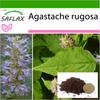
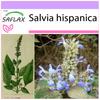
The carefree prairie plant impresses with an extra long-lasting blossoming from July until end of October, while the foliage smells pleasantly of lemon and anise. The magenta-coloured, upright growing, candle-like blossoms also draw the attention of all sorts of butterflies, and even after having died off, they still stand firm and rather decorative in your garden during winter, especially when covered with hoarfrost. Even if you don’t use the plant for eating, it will also provide you with a couple of neat cut flowers for a flower bouquet.
Natural Location:
The Mexican Giant Hyssop originally comes from Mexico.
Cultivation:
Seed propagation indoors is possible throughout the year. Spread and slightly press the seeds onto moist potting compost or herb-substrate and put only very little compost earth on top. Cover the seed container with clear film to prevent the earth from drying out, but don’t forget to make some holes in the clear film and take it every second or third day completely off for about 2 hours. That way you avoid mold formation on your potting compost. Place the seed container somewhere bright and warm with a temperature between 20°C and 25°Celsius and keep the earth – preferably with a water sprayer – moist, but not wet. Depending on the propagation temperature, the first seedlings will come up after two to three weeks.
Place:
Keep the potted plant in a full sunny place near a seating area to enjoy the pleasant lemon fragrance.
Care:
As an outdoor plant, the Agastache needs good permeable and humus-rich earth, while for tub cultivation it is best be kept in a substrate for herbs and with a good drainage. Water the plant consistently and avoid waterlogging at all costs. Even if you take off the withered flower-umbels after blossoming, you can still enjoy the dense light-green coloured foliage. The plant can be split regularly.
During the winter:
The Mexican Giant Hyssop is not very frost-hard in the northern hemisphere. Outdoor plants should be provided with a proper frost-protection and tub plants can hibernate somewhere frost-free.
Picture credits:
- © © Ben Rushbrooke - About © : Contact SAFLAX - http://www.saflax.de/copyright
- © Frank Laue - © Saflax - http://www.saflax.de/copyright
- © Frank Laue - © Saflax - http://www.saflax.de/copyright
- © Chhe - Public domain - http://creativecommons.org/licenses/publicdomain/
- © - . -
- © - -
- © - -
- © - -
- © - -