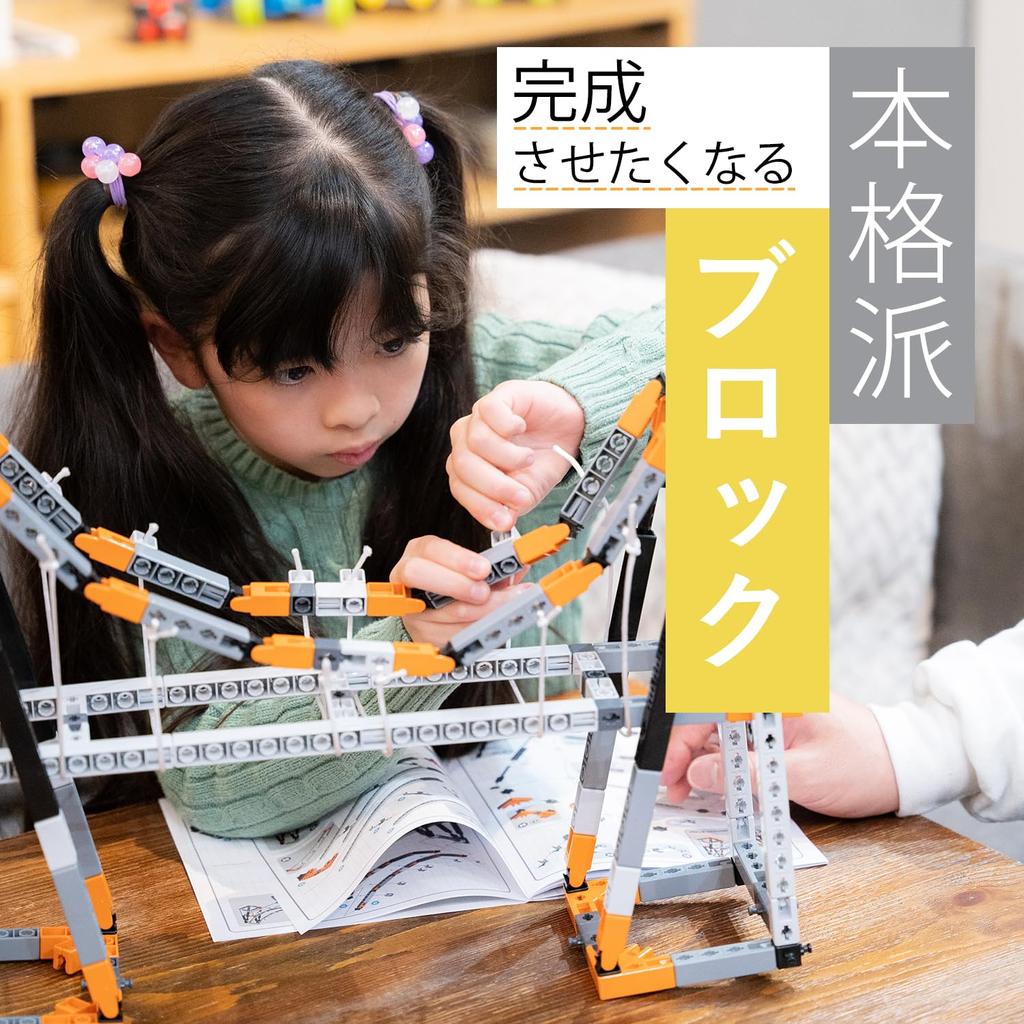
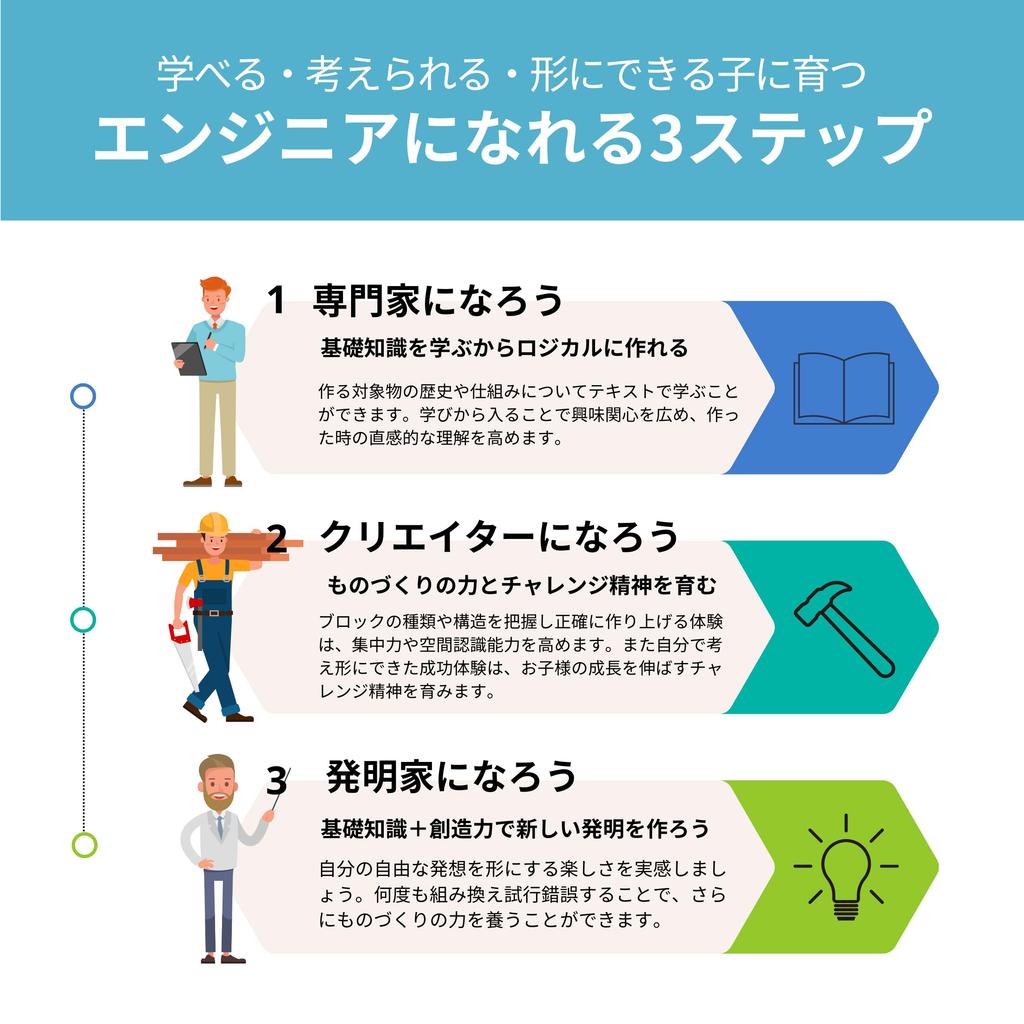
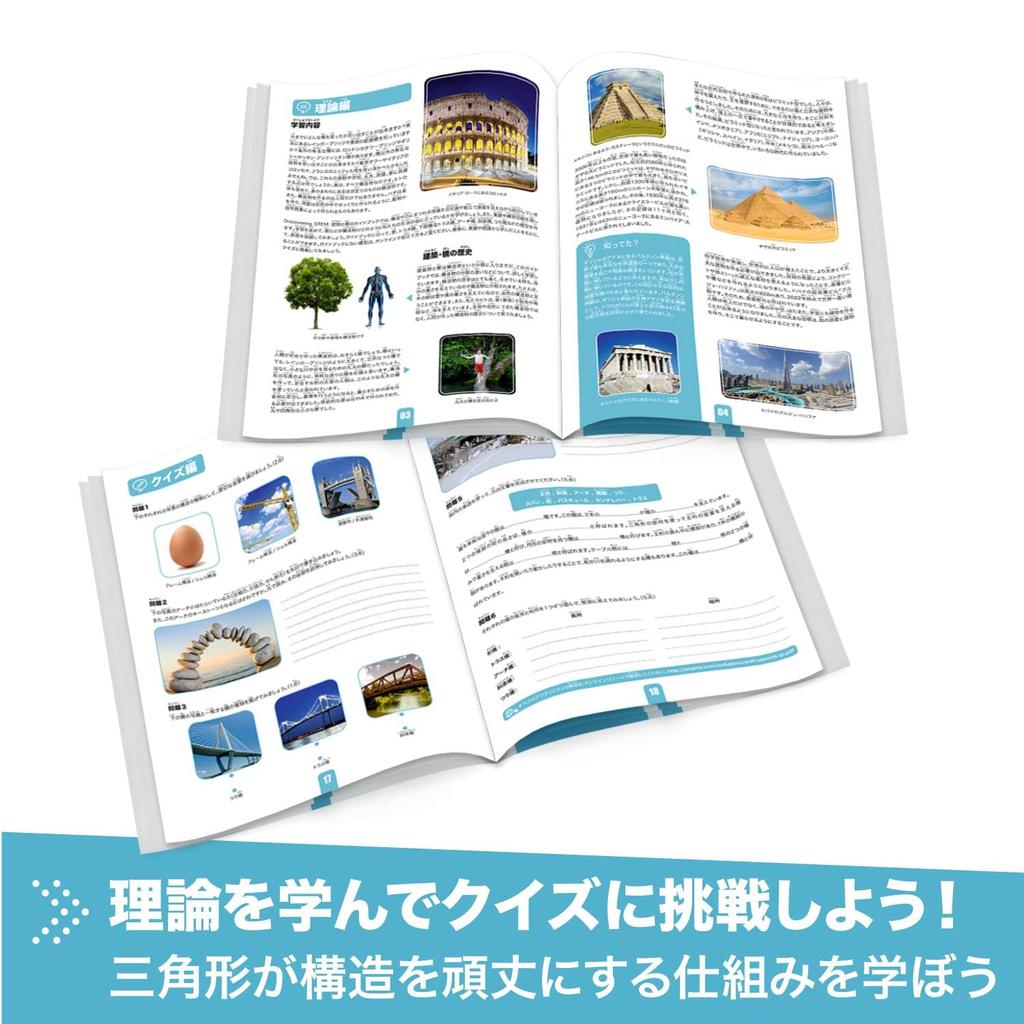
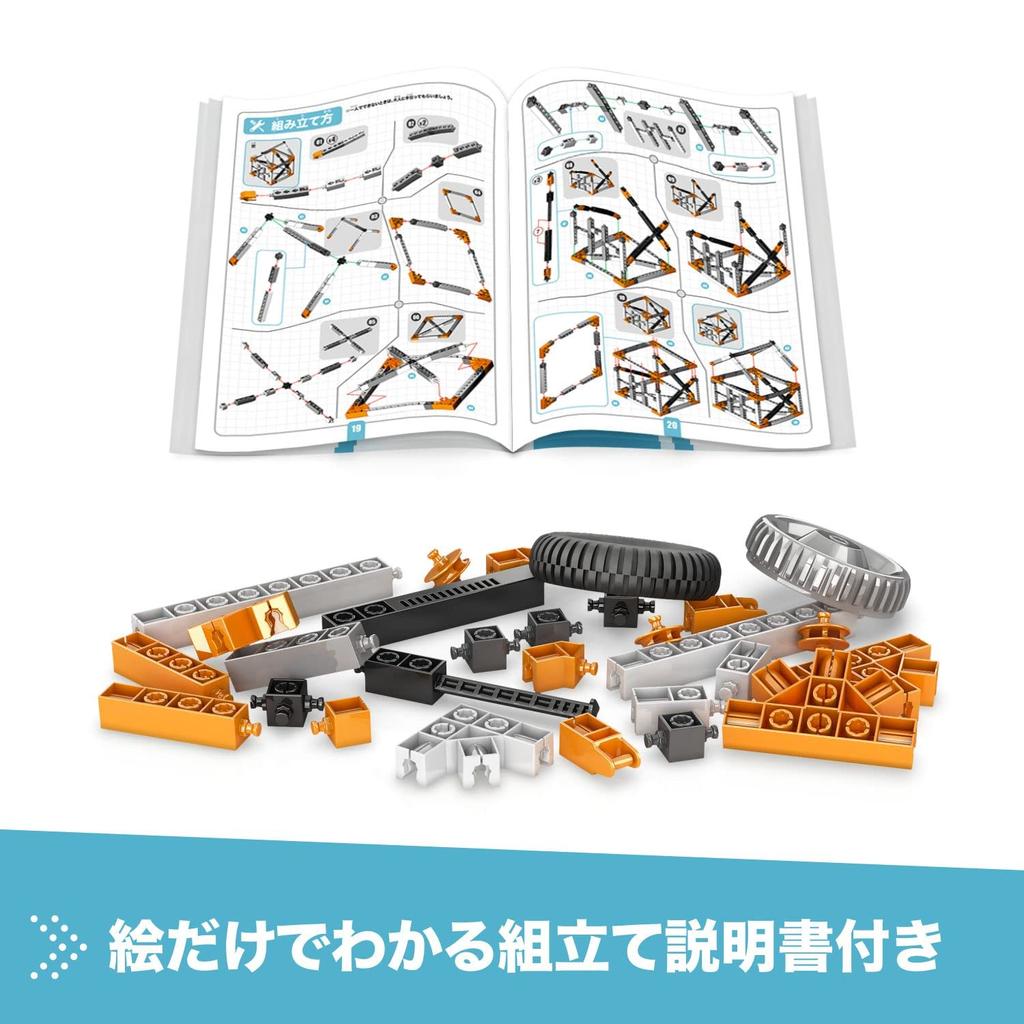
[Expand your world over with these blocks that foster curiosity and a spirit of challenge during your summer vacation] Using the included workbook, children can learn about the theme of "architectural structure," recreate actual building techniques while looking at blueprints, and experiment and consider whether they're being built correctly. By following these steps, children can learn the process that engineers use to build bridges. These engineering blocks allow children to realistically challenge themselves with real-world technologies, developing creative skills that go beyond just playing with blocks. By understanding the principles of nature and science and connecting the dots, children will see the world they take for granted in a completely different light. Experience the "Aha! So that's how it is!" moment for yourself.
Snap-fit construction allows for flexible design: The unique snap-fit construction, patented in the United States, allows for 3D assembly in any direction. In addition to traditional vertical and horizontal assembly, the blocks allow for flexible design, allowing for expansion and contraction, and a range of movement. These blocks are specialized for engineering, allowing children to easily recreate complex structures and create authentic models. They also allow children to freely create anything beyond the instructions, using their imagination.
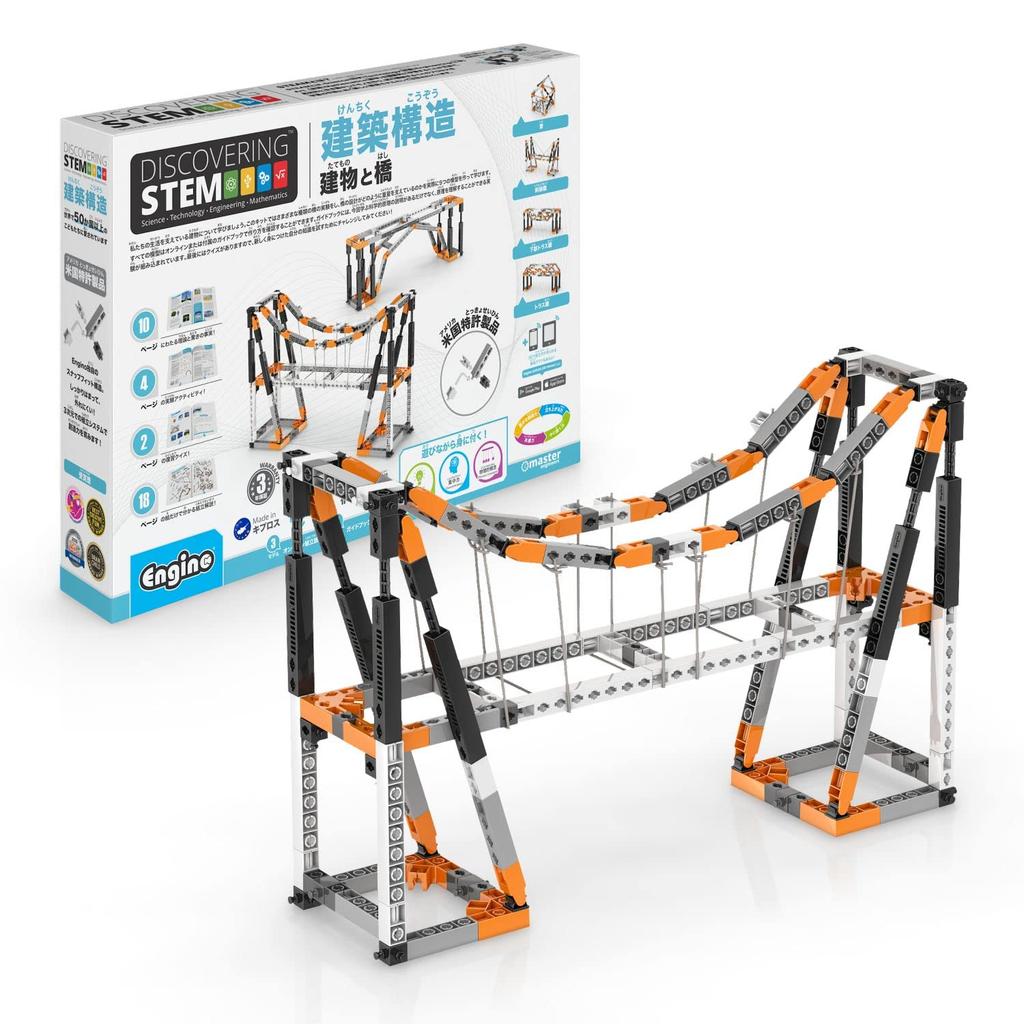
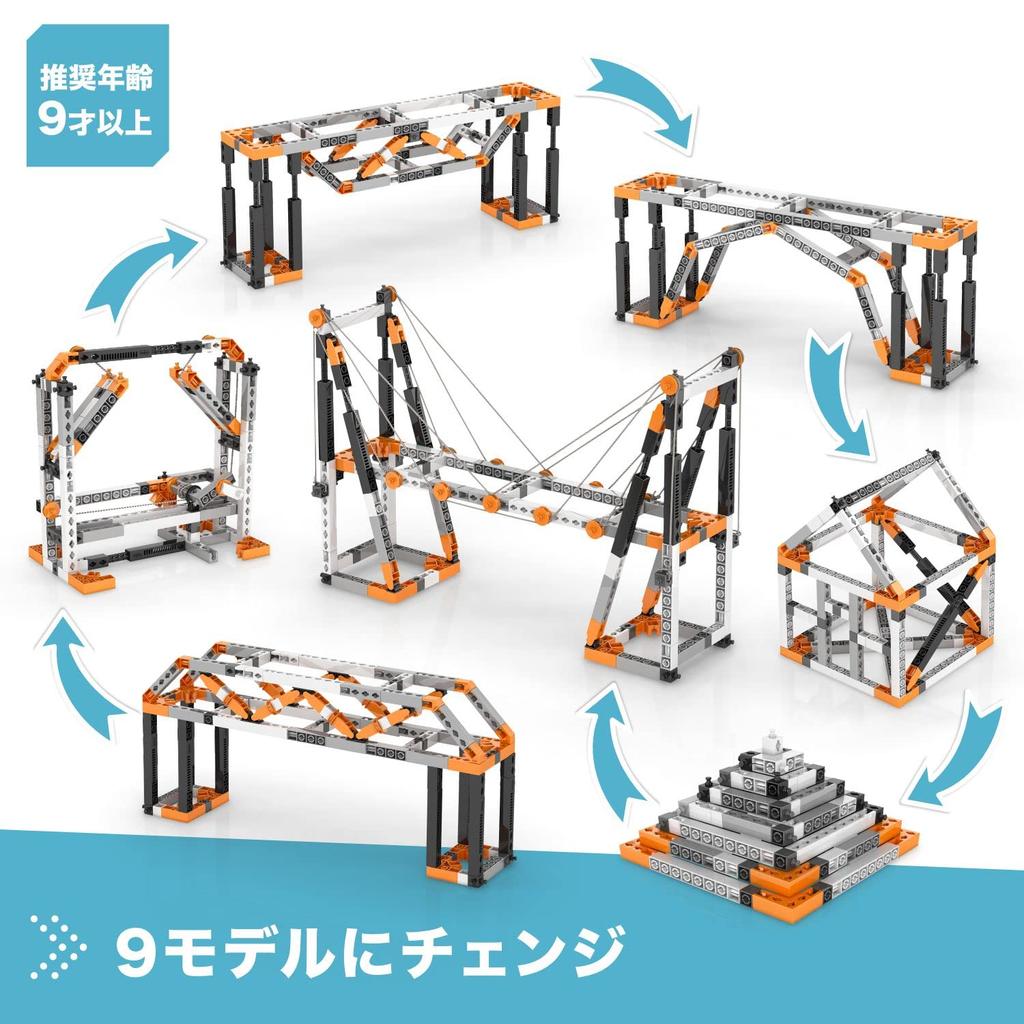
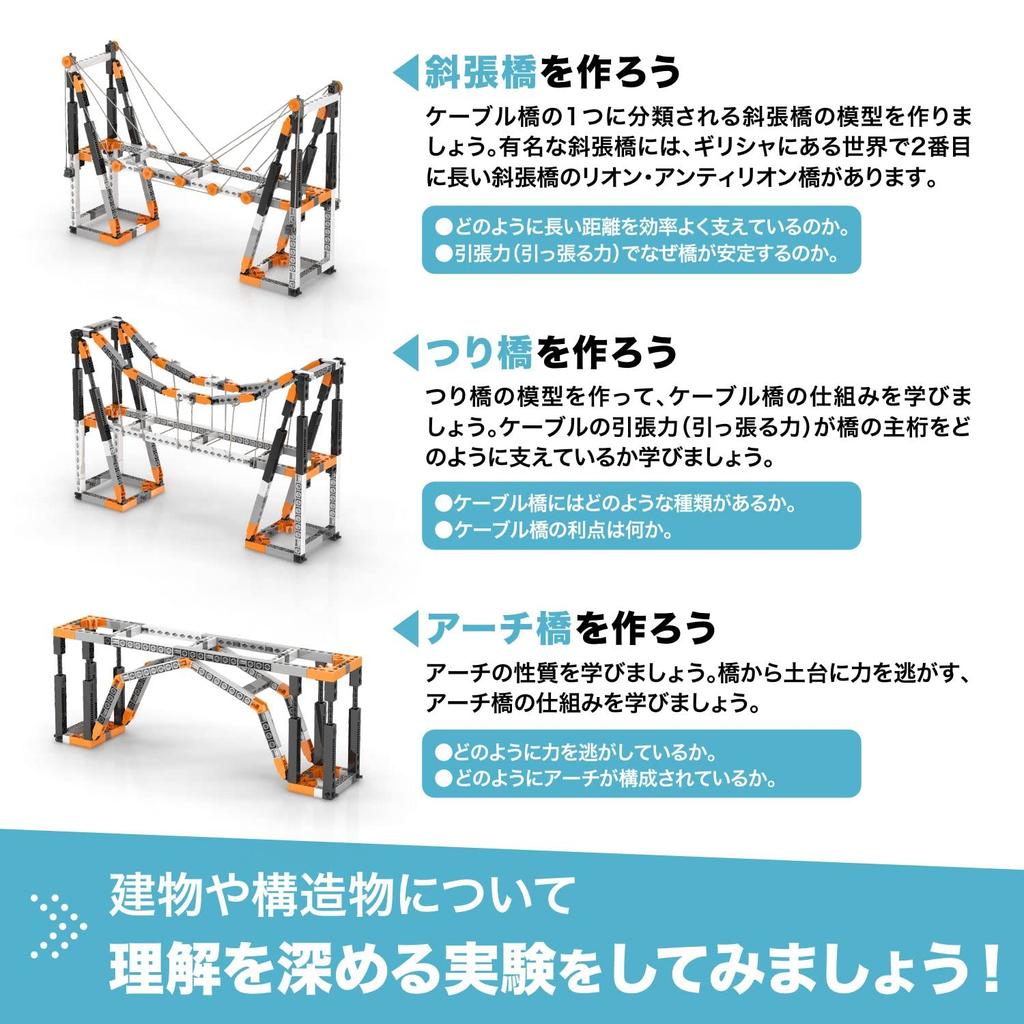
[9 Model Changes] Build a total of nine different models: Arch Bridge, Drawbridge, Cable-Stayed Bridge, Two-Story Bridge, House, Low Truss Bridge, Pyramid, Suspension Bridge, and Truss Bridge. Assembly instructions can be found in the included guidebook, on the website, or in the Engino KidCAD app. With nine different models, you can explore a variety of experiments, ensuring a long-lasting experience with this kit.
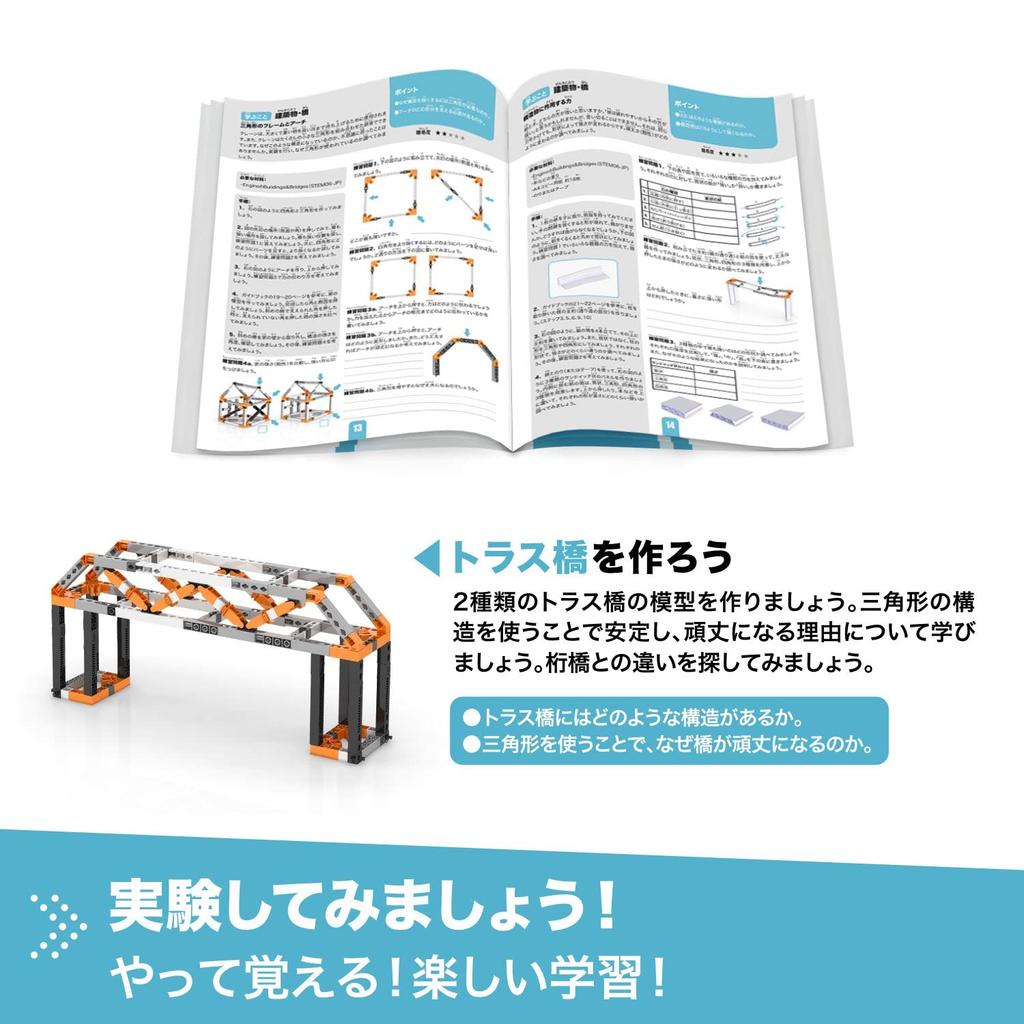
[What secrets lie hidden in the bridges we use every day?] This kit allows you to conduct experiments using various types of bridges. You can actually build several models and learn how bridges are designed to support weight. Do you know what type of bridges Tokyo's Rainbow Bridge and London's London Bridge are classified as? By actually building and touching them, you can learn about the differences in strength, advantages and disadvantages of each bridge and "why they are the way they are," gaining a deeper understanding that cannot be gained through classroom learning.
[Starting with love and fun! STEAM education] Developing intellectual curiosity from "love" and connecting the dots gives children new insights. They begin to ask "why?" and "how?" about everyday things, and their perspective on the world becomes broader and deeper. This leads to new intellectual curiosity, and children acquire the "way of learning" that is needed in today's world: learning while having fun.

 Prekė iš Japonijos


 Nėra pristatymo grąžinimas